How to survive solo in Rust using the Apex Survivor playbook
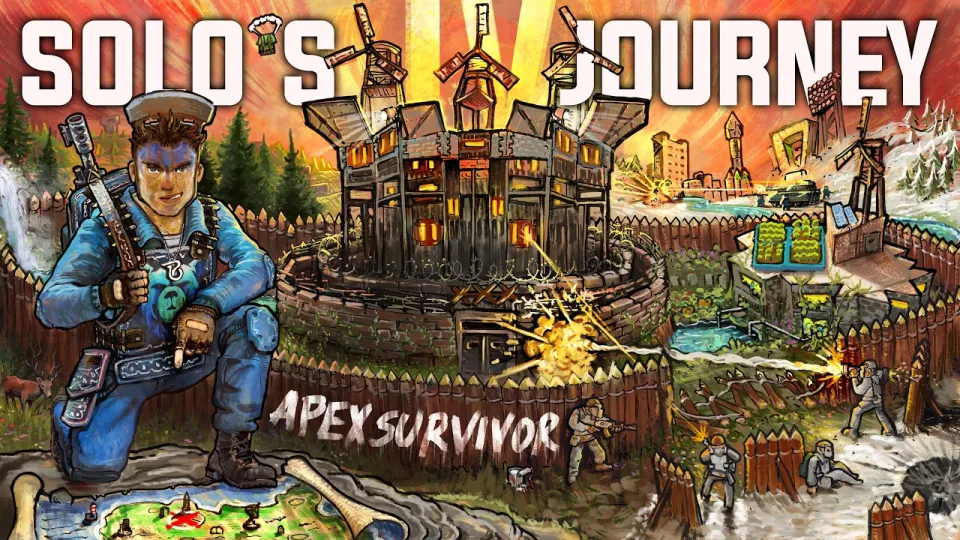
Video: Rust - A Solo's Journey IV: Apex Survivor (Movie)
Want articles like this for your own video to promote it on YouTube and Google? Order them through the Telegram bot @sat_sit_bot. The bot writes and publishes the articles itself (with your YouTube video embedded) on popular topical websites (no ads). Your first 50 articles are free.
· based on the channel Blooprint
Solo Rust survival is a planning problem more than a shooting problem: pick a low-traffic base spot, farm scrap and components on a schedule, clone what you need, and only take fights you can afford to lose. Blooprint's movie Rust - A Solo's Journey IV: Apex Survivor compresses a 14-day solo wipe into roughly five hours across 13 chapters and an epilogue, and its public checklist at the Solo's Journey tracker turns that run into a readable plan you can copy.
What the Apex Survivor run actually is
Apex Survivor is a solo Rust movie built from one continuous 14-day wipe, filmed and edited by Blooprint over more than 300 hours and published as a milestone for 2.5 million subscribers. The video runs about 4 hours 50 minutes and is split into an introduction, 12 numbered chapters and a closing chapter, so it plays like a series rather than a highlight reel.
The companion tracker at https://solosjourneytracker.com is the unusual part: enter a timestamp from the video and the site shows what the player had built, farmed or unlocked at that point. That makes the movie usable as a reference — you can jump to a moment where a base design or a raid decision appears and see the state of the run around it.
Build the wipe as a checklist, not a vibe
A 14-day solo wipe works best when it is broken into milestones you can tick off, because solo players lose momentum faster than groups and rarely notice it. The Apex Survivor structure maps neatly onto that idea: early spawn and starter base, first monuments, a farm base, cloning, mid-wipe raids, and a final push.
A workable order for a solo run:
- Day 1: starter base near a low-tier monument, sleeping bag redundancy, and enough wood and stone to survive the first night.
- Days 2–3: scrap loop through Tier 1 monuments, workbench level 1, and a first set of guns you can actually replace.
- Days 3–5: move to a farm base with room for furnaces, planters and boxes, ideally off the main roads.
- Days 5–8: cloning and gene work so food and cloth stop being a daily tax.
- Days 8–12: raids chosen for profit and low revenge risk, not for prestige.
- Final days: consolidate loot, spend scrap on blueprints you will keep, and stop taking fair fights.
Base design and the triangle core question
A solo base in Rust should prioritize rebuild cost and loot spread over raw size, because a solo player cannot defend a large footprint against a group. Blooprint's run leans on a farm base rather than a showpiece compound, and viewers picked up on the triangle core specifically — an efficient shape that is cheap to honeycomb and awkward to raid from the wrong side.
Practical rules that hold for any solo wipe:
- Keep the main loot room small and place secondary stashes in separate, cheaper structures.
- Build a farm base with furnaces, planters and a water source before upgrading the shooting floor.
- Use the terrain — rocks, cliffs and dense forest — as free honeycomb.
- Assume every door will eventually be blown; split value so one raid is not a full reset.
Scrap economy, monuments and the solo route
Scrap efficiency decides how fast a solo player reaches a competitive kit, and the fastest route is a repeatable loop rather than a single lucky run. In the movie the progression runs through familiar solo content — monuments, the oil rig, cargo ship — with the understanding that each of those is a risk calculation, not a guaranteed payout.
For a solo player the loop looks like this: run Tier 1 monuments for components and low-risk scrap, convert that into workbench level 2, then attempt one high-value target per session rather than chaining them. Oil rig and cargo ship pay well but attract exactly the players who are best at contesting them, so go early, go light, and be ready to leave the loot behind.
Handling groups, alliances and revenge
Solo Rust is a social game whether you want it or not, and the movie's most-discussed moments are about neighbors rather than aim. Viewers responded strongly to an alliance sequence and to a raid on a clan that had been harassing the area — the takeaway is that reputation and timing matter more than raw PvP skill when you are outnumbered.
Three habits that keep a solo run alive:
- Track who lives around you and what they drive; a group that arrives by minicopter is a different threat from one that walks.
- Do not start fights you cannot finish inside a few minutes, because a solo fight that drags on becomes a group fight.
- When a neighbor group collapses, decide deliberately whether to raid the leftovers or stay quiet — the second option is often worth more than the loot.
Common viewer questions about long solo runs
Most doubts around a five-hour solo movie are practical ones: is a 14-day solo wipe realistic, is the editing hiding downtime, and how much of it can a normal player copy? The honest answer is that the movie is a condensed edit of a long grind — farming, sorting boxes and waiting out raids are compressed or cut.
Another recurring theme is toxicity and neighbor behavior. Long wipes generate friction, and the run's calmer handling of hostile encounters is a reminder that not escalating is a strategy, not passivity. If a fight offers no loot and no safety gain, declining it keeps your base and your blueprints intact.
Useful links
- Solo's Journey tracker — timestamp-by-timestamp progress for the Apex Survivor run.
- Blooprint vinyl figure — limited Youtooz release tied to the 2.5M milestone.
- Blooprint mousepads and playmats — Epic Desk collaboration.
- Hires Studio — animated intro work for the movie.
- Veys — thumbnail art.
Final takeaway
Apex Survivor is useful less as entertainment and more as a template: a solo wipe survives on routine — a farm base, a scrap loop, cloning, and raids that do not create enemies you cannot handle. The 14-day structure and the public checklist make the run auditable, which is rare for Rust content. If you want to follow the same path, open the Solo's Journey tracker, pick a timestamp and compare your own wipe against it. The movie is Blooprint's work, and the discipline behind it is what a solo player should copy.
Key takeaways
- Blooprint's Apex Survivor covers a 14-day solo Rust wipe in a single movie with 13 chapters plus an epilogue
- The run was filmed and edited over 300+ hours and released to mark 2.5 million subscribers on the channel
- A companion website, solosjourneytracker.com, lets viewers enter a timestamp and see the player's progress at that moment
- The movie's own checklist is public, so a solo run can be planned as a list of milestones rather than improvised day by day
- Solo survival hinges on farm bases, cloning, quiet expansion and picking raids that other groups will not avenge
Source: Rust - A Solo's Journey IV: Apex Survivor (Movie) · Markdown version
Questions & answers
Is a 14-day solo Rust wipe actually realistic for an average player?
The structure is realistic, the pace is not. A solo player can hold a base and progress for two weeks, but the movie compresses farming, sorting and downtime that in real time take hours. Copy the milestones — starter base, workbench level 2, farm base, cloning, selective raids — and expect each to take longer than it does on screen.
Why do solo players prefer a farm base over a big compound?
A farm base gives furnaces, planters and storage without advertising a large loot footprint. A solo player cannot defend a wide compound against a group, so a compact core with honeycomb and split loot is cheaper to rebuild after a raid and less attractive to raiders.
Should a solo player attempt oil rig and cargo ship?
Yes, but as calculated risks rather than routine. Both pay well in components and scrap, yet they attract strong players and groups. Go early in a session, travel light, and treat extraction as optional — losing a kit on the rig is cheaper than losing a base defense because you were away.
How should a solo player respond to hostile neighbors?
Track them, avoid fights you cannot end quickly, and pick revenge targets that will not drag in an entire clan. Declining a fight with no loot and no safety benefit is a legitimate strategy, and staying quiet after a neighbor group collapses is often worth more than raiding the leftovers.