Valorant aim guide for 2026 that builds low cortisol calm and Phoenix pressure
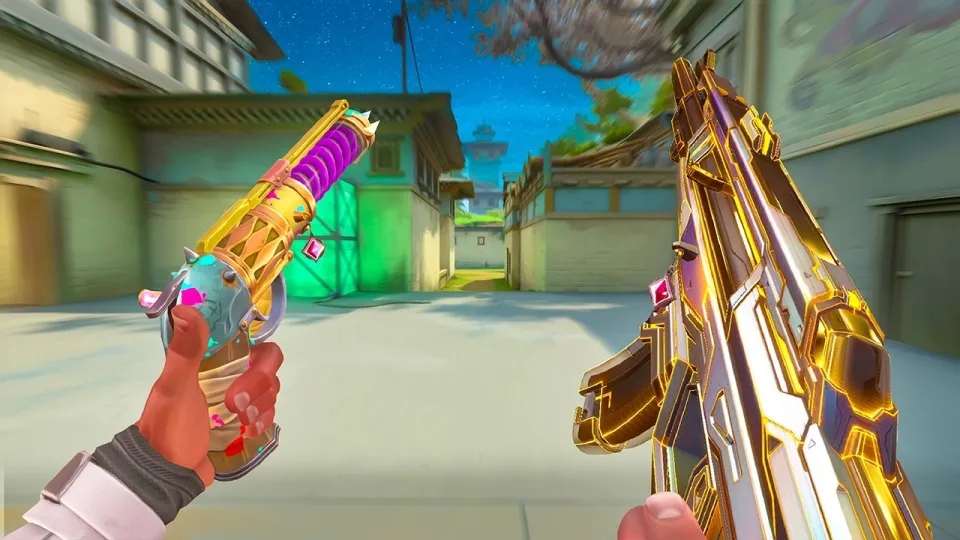
Video: low cortisol aim..
Want articles like this for your own video to promote it on YouTube and Google? Order them through the Telegram bot @sat_sit_bot. The bot writes and publishes the articles itself (with your YouTube video embedded) on popular topical websites (no ads). Your first 50 articles are free.
· based on the channel Rawzu
Valorant aim in 2026 is less about raw flick speed and more about staying composed under pressure, which is exactly what the "low cortisol" label describes. The term, popularized by creators like Rawzu, means keeping your crosshair steady, pre-aiming common angles and letting the enemy walk into your shot instead of chasing them. If you want to copy it, start with the Hone optimization page to remove stutter and frame drops, then rebuild your habits around calm crosshair placement rather than reactive flicks.
What low cortisol aim actually means in Valorant
Low cortisol aim is a playstyle where the player minimizes panic inputs and lets preparation do the work. In practice it looks boring on a highlight reel: the crosshair sits at head height on a likely angle, the mouse barely moves, and the kill happens because the target crossed the line rather than because the player snapped onto it. Rawzu's clips lean into this deliberately, which is why the channel tags them as calm aim, satisfying clips and even ASMR alongside standard Valorant gameplay.
The idea borrows from sports psychology rather than from aim trainers. Under stress, players over-grip the mouse, overshoot micro-corrections and start flicking at sounds instead of confirmed targets. A calm routine replaces those reflexes with three habits:
- Keep the crosshair at head level on the next angle before you peek.
- Clear one angle at a time instead of swinging wide into open space.
- Fire in short bursts and reset the crosshair between bursts.
None of this requires a new mouse. It requires deciding, before the round starts, where your crosshair will already be when the enemy appears.
Rawzu's exact Valorant settings and peripherals
Rawzu's published setup is a low-sensitivity, high-refresh configuration built for consistency rather than flashy turns. The numbers below come straight from the channel description and are worth copying if you want a baseline to tune from.
- Sensitivity: 400 DPI with 0.625 in-game sensitivity
- Resolution: 1440x1080 stretched
- Crosshair: 1-6-2-2
- Mouse: Logitech G Pro X Superlight 2
- Mousepad: Artisan Zero Soft
- Monitor: Zowie XL2566K at 360Hz
A 400 DPI and 0.625 combination is on the slower side of the Valorant spectrum, which suits a calm style: larger arm movements for turns, small wrist adjustments for micro-corrections. The 1440x1080 resolution stretches the image horizontally, making enemy models slightly wider on screen, a common choice among players who prefer consistent head-level tracking over native clarity. The Artisan Zero Soft pad adds stopping power, which reduces overshoot when you do need to flick.
How Phoenix supports a calm, aggressive duelist style
Phoenix is an offensive Valorant agent built for hunting enemies while crippling their ability to fire back. That sounds like the opposite of a calm playstyle, but the kit actually rewards preparation. Blaze creates a wall that blocks vision and deals damage, so you can cross open ground without exposing yourself to a held angle. Curveball blinds enemies even when they are tucked behind corners, which means you can clear a common pre-aim spot without dry-peeking it.
Hot Hands and Run it Back make Phoenix durable enough to survive the first trade and keep the pressure on. In a low cortisol framework, the abilities are used to remove uncertainty before the gunfight: blind the angle, wall the sightline, then take a duel you already chose. Players who like aggressive entries often find Phoenix easier to stay calm on than a pure movement duelist, because the utility buys time to reset the crosshair.
Building a calm aim routine before ranked
A calm aim routine is a short, repeatable warm-up that trains crosshair placement instead of reaction speed. Ten to fifteen minutes is enough if the drills are specific:
- Spend five minutes in the range on stationary bots, firing only when the crosshair is already on the head.
- Run two or three Deathmatch games with a rule against flicking at footsteps.
- In each Deathmatch, pre-aim every angle you clear and note how often the enemy appears where you expected.
- Finish with one Aim Labs or KovaaK session focused on micro-corrections, not tracking speed.
The goal is not a higher score. It is to make the calm version of your aim the default, so that in a clutch you are not fighting your own hands. Pair the routine with a stable frame rate, since inconsistent performance is one of the fastest ways to break composure mid-round.
Common questions about calm aim and Phoenix gameplay
Viewers of this style of Valorant content tend to ask the same practical things, and the answers usually come down to discipline rather than hardware. The most frequent doubt is whether a slow sensitivity can keep up with fast movement duelists. It can, as long as you turn with your arm and keep the wrist for corrections; the trade-off is that wide swings take more physical space on the desk.
Another recurring question is whether Phoenix is viable for players who prefer a passive, patient style. The agent's kit pushes you toward contact, so the calm version of Phoenix play means choosing when to take that contact rather than avoiding it. Blaze and Curveball give you the tools to make the first engagement favorable, and Run it Back lets you test an angle with a safety net. The rest is crosshair discipline and accepting that some duels are lost because of positioning, not aim.
Useful links
Final thoughts on Valorant calm aim
The low cortisol approach is not a secret technique; it is a set of habits that make your aim predictable and repeatable. Rawzu's Phoenix clips show what that looks like when the crosshair is already waiting, the utility removes the guesswork and the mouse barely moves. Copy the settings as a starting point, but spend more time on pre-aim and angle discipline than on sensitivity tweaks. If you want to remove the technical excuses first, optimize your PC through Hone and give yourself a stable frame rate before ranked. The channel Rawzu is worth following for more examples of this calm, deliberate style in action.
Key takeaways
- Rawzu runs 400 DPI at 0.625 in-game sensitivity, a 1440x1080 stretched resolution and a 1-6-2-2 crosshair.
- His setup is a Logitech G Pro X Superlight 2 on an Artisan Zero Soft pad with a Zowie XL2566K 360Hz monitor.
- The low cortisol label describes a calm aim style: no flick spam, heavy pre-aim, minimal unnecessary mouse movement.
- Phoenix brings Blaze vision blocking, Curveball blinding around corners, Hot Hands self-heal and Run it Back for aggressive duels.
- The video is a Phoenix-focused montage on Rawzu's channel, with clips such as Icebox moments and a calm-aim ASMR edit.
Source: low cortisol aim.. · Markdown version
Questions & answers
What does low cortisol aim mean in Valorant?
It describes a calm, prepared aim style where the crosshair is already placed on the likely angle and the player avoids panic flicks. The kill comes from positioning and patience rather than fast reactions, which is why the style is associated with satisfying, ASMR-style clips.
What sensitivity and resolution does Rawzu use?
Rawzu plays at 400 DPI with 0.625 in-game sensitivity on a 1440x1080 stretched resolution. The crosshair is 1-6-2-2, and the setup includes a Logitech G Pro X Superlight 2 on an Artisan Zero Soft pad.
Is Phoenix a good agent for a calm, patient player?
Phoenix is an aggressive duelist, but his utility lets you control when the fight happens. Blaze blocks vision, Curveball blinds enemies behind corners and Run it Back gives a safety net, so patient players can take favorable duels instead of forced ones.
Do I need a 360Hz monitor to play this style?
No. A high refresh rate like the 360Hz Zowie XL2566K helps with consistency, but calm aim depends mostly on crosshair placement and angle discipline. A stable frame rate matters more than the panel's maximum refresh rate.